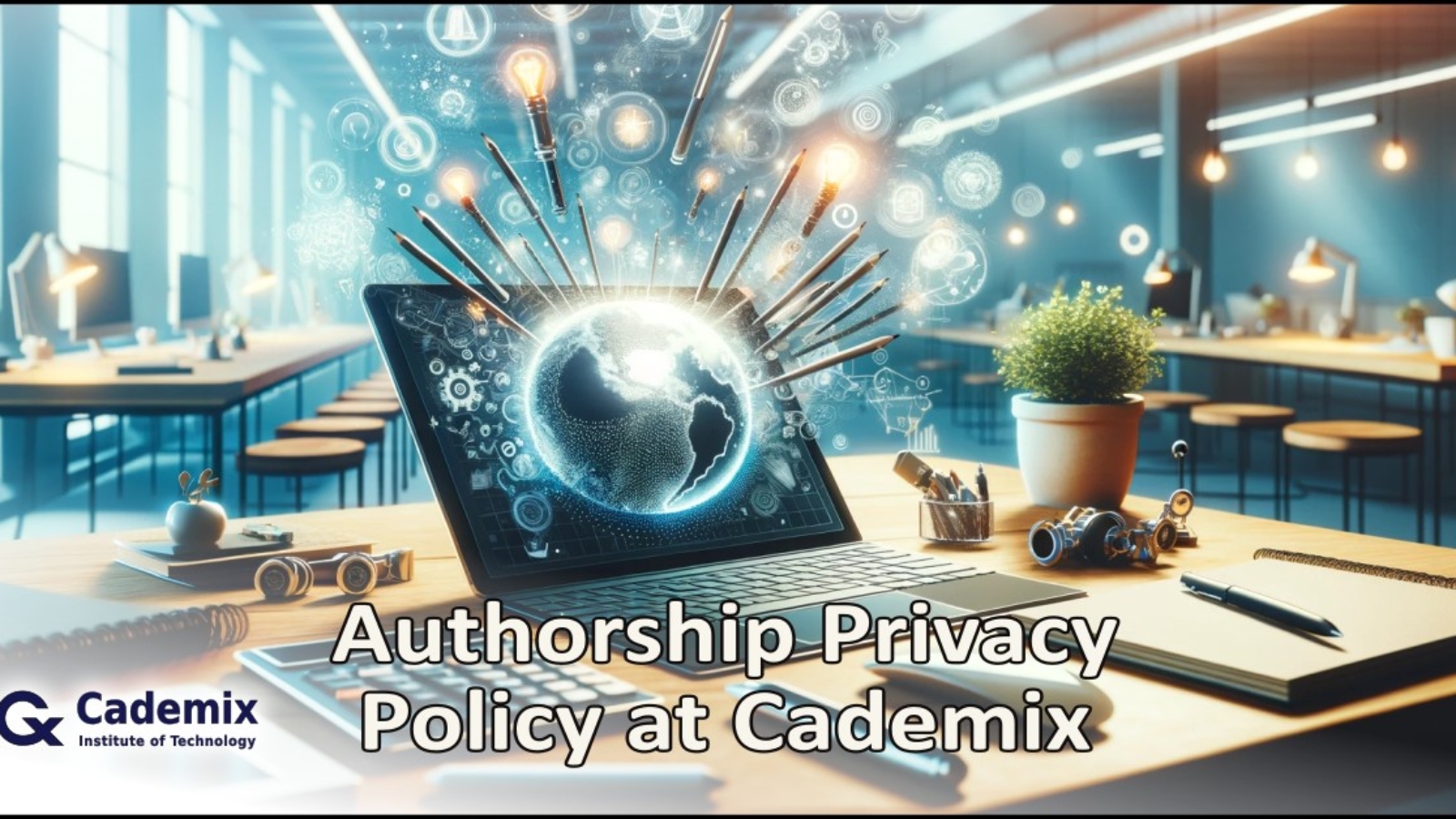
This article explores the nuanced approach of the Cademix Institute of Technology to authorship in publishing, specifically focusing on its privacy policy that balances anonymity with accountability. It delves into the reasons behind author anonymity, detailing the institute’s commitment to protecting personal and professional interests, while ensuring integrity and transparency in its publications. The article also discusses the implementation of the unique Author Identification Code system, its legal and ethical implications, and how Cademix navigates the challenges of maintaining author privacy alongside the necessities of academic and public discourse.
At the Cademix Institute of Technology, we uphold a high standard of privacy and discretion, as evident in the authorship policies of Cademix Magazine. The name appearing as the author in our articles may either be the real name of the contributor or a pseudonym, in line with the author’s preference and specific needs. In cases where an article is attributed to ‘Cademix Editor’, the ‘Cademix Editorial Board’, or where no author is mentioned at all, it signifies our commitment to maintaining a degree of anonymity. This practice is integral to protecting the identities of our contributors when they require such confidentiality, often necessitated by personal, occupational, or security considerations. Furthermore, this approach accommodates instances where authorial commitments, such as the submission of necessary documents, fulfillment of agreed terms, or other verification processes, may be pending or incomplete. For those readers and researchers seeking deeper engagement with the content or its authors, the Cademix Institute of Technology facilitates this through a unique Author Identification Code, provided to each of our contributors. This ensures a secure and respectful channel for inquiries and academic exchanges. Our approach not only safeguards the privacy of our authors but also ensures the integrity and scholarly relevance of our publications. For comprehensive insights into our policies and their implications for referencing and academic discourse, we encourage a thorough reading of the dedicated reference article available in Cademix Magazine.
The Need for Anonymity in Authorship
In the realm of publishing, the decision to remain anonymous can be driven by various compelling reasons. At Cademix Institute of Technology, we acknowledge and respect these motivations, recognizing the multifaceted nature of authorship in the contemporary world.
Personal and Professional Privacy: Many authors seek anonymity to protect their personal and professional lives. This could be due to the sensitive nature of the content they are creating or the desire to keep their literary endeavors separate from their public or professional persona.
Security Concerns: In some instances, security concerns drive the choice for anonymity. Authors tackling controversial or politically sensitive topics may prefer to stay anonymous to ensure their safety and well-being.
Creative Freedom: Anonymity can also be a powerful tool for creative expression. It allows authors to explore different genres or controversial topics without the constraints of their established reputation or public expectations.
Unresolved Commitments: At times, anonymity is a practical solution for authors who have yet to fulfill certain obligations, such as completing necessary documentation or verification processes. It enables continued contribution while these administrative aspects are sorted out.
In each of these scenarios, Cademix’s policy provides a safe haven for authors, allowing them to express themselves freely while ensuring that their privacy and security are not compromised. Our approach recognizes the diverse circumstances of our authors and offers a flexible framework to accommodate their needs.
Cademix’s Authorship Privacy Policy
At Cademix Institute of Technology, our authorship privacy policy is crafted with meticulous attention to detail, ensuring that it aligns with our core values of integrity, transparency, and respect for individual privacy.
Policy Overview: Our policy provides authors the option to publish under their real name, a pseudonym, or anonymously. This includes instances where articles are attributed to ‘Cademix Editor’, ‘Cademix Editorial Board’, or where no author is listed at all. Each option serves different needs and scenarios, offering flexibility and respect for the author’s preferences.
Real Names and Pseudonyms: When authors choose to use their real name or a pseudonym, it signifies a willingness to be associated directly with their work. Pseudonyms can serve as a creative alias or a means to separate one’s professional identity from their authorial persona.
Anonymity for Protection and Privacy: In cases where anonymity is chosen or when articles are attributed to the editorial entities of Cademix, it underscores our commitment to safeguarding the author’s identity. This is particularly crucial for sensitive, controversial, or security-related content.
Unique Author Identification Code: To maintain a connection between anonymous works and their creators, we use a unique Author Identification Code system. This allows for accountability and follow-up, while preserving the anonymity of the author.
Reasons for Anonymity: Various factors, including personal or occupational concerns, security reasons, incomplete administrative commitments, or the author’s preference, may drive the decision for anonymity. Our policy is designed to be inclusive and accommodating of these diverse circumstances.
Through this policy, Cademix Institute of Technology strives to create an environment where intellectual freedom, privacy, and responsibility coexist harmoniously. Our approach ensures that authors feel secure and supported, regardless of how they choose to be represented in their writings.
Implementing Anonymity: The Author Identification Code System
A pivotal aspect of our authorship privacy policy at Cademix Institute of Technology is the implementation of the Author Identification Code (AIC) system. This system plays a crucial role in balancing the anonymity of our authors with the need for accountability and traceability in our publishing process.
Functionality of the AIC System: Each author, upon choosing to publish anonymously or under a pseudonym, is assigned a unique Author Identification Code. This code acts as a confidential link between the author and their work, enabling the institute to maintain a record of authorship while protecting the author’s identity.
Purpose and Benefits:
- Confidentiality and Security: The AIC ensures that an author’s identity remains protected, particularly in situations where revealing their identity could lead to personal or professional risks.
- Accountability: Despite the anonymity, the AIC allows Cademix to trace the authorship of each publication, ensuring responsibility and ethical compliance in our publishing practices.
- Facilitating Scholarly Communication: For readers or researchers seeking further engagement with an anonymous author’s work, the AIC provides a mechanism to facilitate this communication while respecting the author’s privacy.
Managing the AIC System: The management of the AIC system is handled with the utmost care, ensuring data protection and privacy in compliance with relevant legal standards. Access to the AIC database is restricted and monitored, reflecting our commitment to data security and ethical responsibility.
Inquiries and Academic Discourse: When inquiries related to an anonymously published work arise, the AIC system allows for controlled and respectful engagement. Whether it’s for academic discourse, feedback, or further collaboration, the system provides a structured pathway for these interactions.
The Author Identification Code system is a testament to Cademix’s innovative approach to modern publishing. It underscores our dedication to fostering a safe and open environment for authors, where the freedom of expression is balanced with the imperatives of accountability and scholarly integrity.
Conclusion: Upholding Integrity in Anonymity
As we conclude our exploration of the Authorship Privacy Policy at Cademix Institute of Technology, it is clear that the intricate balance of anonymity and accountability is not just a policy choice, but a reflection of our deeper commitment to the values of intellectual freedom, privacy, and responsibility.
A Harmonious Blend: Our approach intricately blends the need for privacy and security of our authors with the imperatives of transparency and accountability in publishing. It is a harmonious blend that respects the complexities of the modern author’s needs while upholding the highest standards of publishing ethics.
Empowering Authors: By providing options for anonymity and pseudonymity, alongside the unique Author Identification Code system, we empower our authors. We offer them the freedom to express their thoughts and expertise without compromising their personal and professional safety or integrity.
Looking Forward: As the landscape of digital publishing continues to evolve, Cademix Institute of Technology remains committed to adapting and enhancing our policies. We aim to stay at the forefront of addressing the challenges and embracing the opportunities that come with the changing dynamics of authorship and publishing.
Invitation for Engagement: We encourage our readers, authors, and the broader academic community to engage with us in this ongoing conversation. Your insights and feedback are invaluable in refining our practices and ensuring that we continue to serve the best interests of our diverse community.
In essence, Cademix’s Authorship Privacy Policy is more than just guidelines; it is a manifestation of our dedication to fostering a safe, respectful, and dynamic scholarly environment. We strive to be a beacon of innovation and integrity in the world of publishing, continually supporting the pursuit of knowledge and the freedom of expression.
People also visited:

Prescription Contact Lenses: Choosing the Right Fit for Your Vision Needs

Openai: Leading the Future of Artificial Intelligence

How To Use AI To Boost Career Confidence In A VUCA Job Market

Precision Matters: 8-Bit vs. 16-Bit Medical Image Processing

Introduction to GPT-4o: The New Frontier in AI Technology

The Future of AI with GPT-4o: Innovations and Expectations

Career Development Plan during Covid-19

Confidentiality during Job Training: A Guide for Employers

Optimizing Efficiency in High-Voltage Power Transmission for Renewable Energy Integration

Powering the Fields: The Evolution and Impact of Farm Tractors

Technology-Driven Career Acceleration: Why AI is Not Enough

Defender Personality: Tech Support Representative

Comprehensive Guide to Europass CV: How to Create and Use It Effectively

The Science Behind Bifocal Contacts: An In-Depth Look at Optics and Vision Correction

Engineers & IT Graduates to Europe: Art of making a smart move with your career during post pandemic...

SEO-Optimierung für mehrsprachige Websites: Ein umfassender Leitfaden

What It Takes to Be an Influencer

Pectin Extraction – A Review

Phoropter - Essential Tool in Optometry
Precision Farming System: Revolutionizing Agriculture with Technology

Eye Contacts: A Comprehensive Guide to Choosing and Caring for Contact Lenses

Navigating the Evolving Job Market in Central Europe: Insights on Domesticity, Regulation, and High-...

International Applicants in Europe: Psychological Barriers and Adaptation Strategies

How Public Perceives Multidisciplinary Experts: Insights from Psychology and the Halo Effect
Must-Reads for Job Seekers
People also visited:
How To Use AI To Boost Career Confidence In A VUCA Job Market
Phoropter - Essential Tool in Optometry
Technology-Driven Career Acceleration: Why AI is Not Enough
Optimizing Efficiency in High-Voltage Power Transmission for Renewable Energy Integration
The Future of AI with GPT-4o: Innovations and Expectations
Eye Contacts: A Comprehensive Guide to Choosing and Caring for Contact Lenses
Career Development Plan during Covid-19
Confidentiality during Job Training: A Guide for Employers
Powering the Fields: The Evolution and Impact of Farm Tractors
Engineers & IT Graduates to Europe: Art of making a smart move with your career during post pandemic...
Defender Personality: Tech Support Representative
Navigating the Evolving Job Market in Central Europe: Insights on Domesticity, Regulation, and High-...
Openai: Leading the Future of Artificial Intelligence
Precision Farming System: Revolutionizing Agriculture with Technology
Prescription Contact Lenses: Choosing the Right Fit for Your Vision Needs
Introduction to GPT-4o: The New Frontier in AI Technology
Pectin Extraction – A Review
International Applicants in Europe: Psychological Barriers and Adaptation Strategies
SEO-Optimierung für mehrsprachige Websites: Ein umfassender Leitfaden
How Public Perceives Multidisciplinary Experts: Insights from Psychology and the Halo Effect
What It Takes to Be an Influencer
Precision Matters: 8-Bit vs. 16-Bit Medical Image Processing
Comprehensive Guide to Europass CV: How to Create and Use It Effectively