
In this article, we studied the history and regulation of food additives in Europe.
By: Zahra Kamali and Maryam Vanaee, Cademix Institute of Technology
Introduction
The use of food additives dates back several centuries. Food preservation began when man discovered how to store food from one harvest season to the next. Also he discovered how to maintain food by salting and smoking meat and fish. Ancient Egyptian papyri around 1500 BC used food additives. Also, they are the first consumer of food additives. Food additives are added to food during its preparation, processing, manufacturing, treatment, or packaging.
Cooks frequently use baking powder as a raising agent, thickeners for sauces. Also, we use gravies, and colors like cochineal to turn good-quality raw materials into safe, wholesome, and enjoyable foods. Food science and technology advances have resulted in the discovery of numerous new substances. This substances can perform a variety of functions in foods over the last 50 years. They are now readily available and include Emulsifiers in margarine, sweeteners in low-calorie products. A wide range of preservatives and antioxidants use to slow product spoilage and rancidity while maintaining taste, and many others.
What are Food Additives?
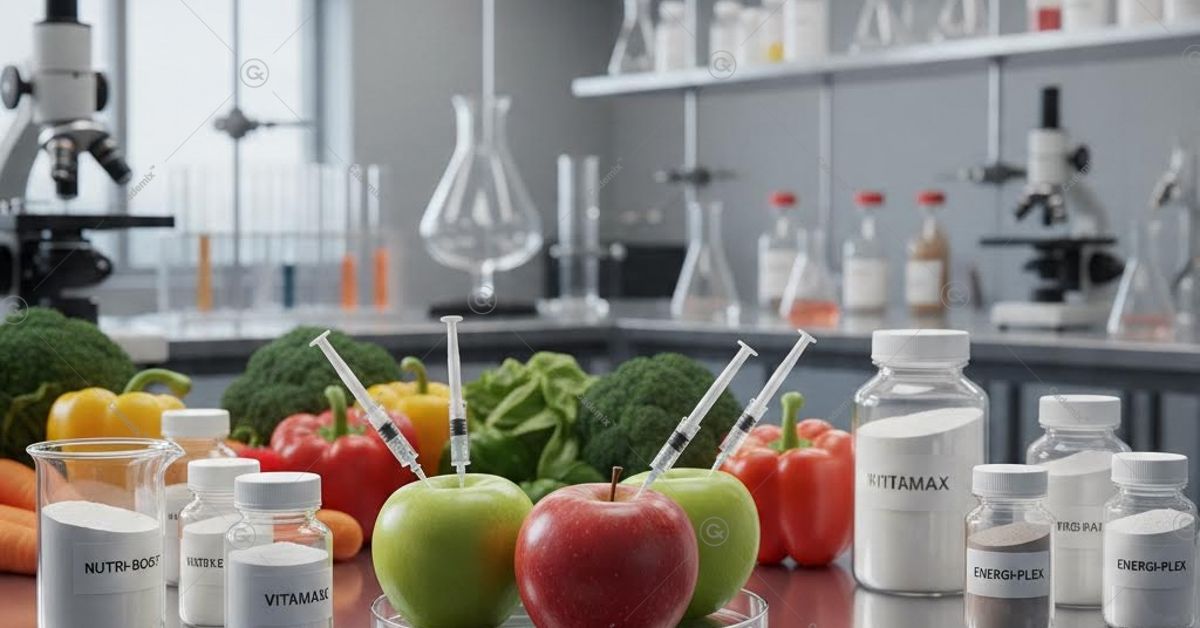
Food additives can maintain or improve food’s safety, freshness, taste, texture, or appearance. For centuries, people used food additives like salt , sugar and sulfur dioxide to preserve food. Food additives have evolved over time to meet the needs of food production. Because making food on a large scale differs from making it on a small scale at home. We use additives to ensure that processed food remains safe throughout its journey from factories to consumption.
They are only justified when they serve a well-defined technological function. Such as preserving the nutritional quality of the food or enhancing the food’s stability. They can:
- be natural or synthetic,
- come from plants, animals, or minerals,
- exist in foods on purpose to perform technological functions.
There are thousands of food additives on the market. All of which pay attention to make food safer or more appealing in some way. According to their function, WHO and FAO keep dividing food additives into three broad categories. They are chemicals that preserve the freshness of foods or improve their color, flavor, or texture. Some of them cause allergic reactions in a small percentage of people. Finally, they are substances that are added to food to improve its flavor, appearance, or shelf life. They also have some nutritional value as well.
Why Food Additives used
They are used in food for a variety of technological reasons. This technology including improving shelf life, processing efficiency, eating characteristics, and consumer appeal. Others have only recently been introduced, while some have been used for hundreds of years. They are the result of more than 2000 years of innovation in the food industry. When man evolved from a nomadic hunter-gatherer to a settled community. In addition, they needed to figure out how to store food in case of scarcity. According to location, meat was salted, smoked, dried, or frozen.
Food additives include coloring and dyes, preservatives, emulsifying and stabilizing agents, antioxidants, synthetic and natural flavoring agents. They improve specific sensory characteristics, and bleaching agents. Prior to World War II, they were scarce items for using as functional additives. New additives proliferated as a result of the food technology revolution in the 1940s and 1950s. Furthermore, changes in demographics, particularly the migration of people from farms to cities, fueled an increase in the demand for additives like preservatives.
How to regulate Food Additives in Europe
A true single market for food products could not exist without harmonized rules for additive authorization and use conditions. All food additives, including sweeteners and coolers, are subject to European law, which governs their use and labeling. A database on the European Commission’s website contains a list of authorized food additives. As well as, it include any legal maximum amounts. The database contains information on which foods each additive is necessary to use in. As well as any legal maximum amounts. A separate regulation defining specific purity criteria specifies the purity required for these additives.

How is the safety of Food Additives evaluate in EU?
European Food Safety Authority (EFSA) seeks to establish an Acceptable Daily Intake (ADI) for each substance. They regulate the Food additives in Europe in a very details process. The ADI is the amount of a substance that people can consume on a daily basis. The most common unit of measurement for ADIs is milligrams per kilogram of body weight per day (mg/kg bw/day).
Following a review of all available evidence, EFSA may either confirm or amend an existing ADI. When there is insufficient data to establish an ADI, a margin of safety can be calculating to determine whether the estimated exposure is of concern. There is no need to set an ADI in other cases, such as for substances that are already present in the body or are regular components of the diet, or that did not show adverse effects in animal studies.
What are the rules on labeling on Food Additives in Europea (EU)?
They can only be going to sell with the labeling that Article 22 of Regulation (EC) No 1333/2008 requires. This information must be easily visible, legible, and permanent. On the package or containers, the following information can be available:
name and/or E-number as specified in Regulation (EC) No. 1333/2008 for each food additive, or a sales description that includes the name and/or E-number of each food additive. The statement “for food” or “restricted use in food”, or a more specific reference to its intended food use. If necessary, the special storage and/or use conditions for the minimum durability date or the use-by date.
Conclusion
In this article we have reviewed the history of using the additives. Specifically how we use them in Europe , their application and they packaging, labeling and the related regulation. Authorized food additives are commonly known as safe additives. They have also grown in popularity and utility in recent years. Food manufacturing expert use of ready-made mixes, flavoring and coloring agents, and essences. Additives can also help with the production of quick and easy-to-prepare convenience foods.
About the Author
Zahra Kamali is a professional Food-tech Entrepreneur with Bachelor Degree in Cooking. And Bakery from the Iran University of Applied Science. She has about 15 years of experience as a professional Chef. And Registered and Licensed Healthy Food Manufacturer in Iran (Has the mark I.R.l.FDO/Health code151245). She is a entrepreneur and founder of the Trademark “Menipest”, founded in Mashhad, Iran. Her target groups were the rural areas in Baluchistan/Iran (away from City and Villages). Her first article is about Rural Entrepreneurship . Other article comes out of her youre personal experience in the field of SDG – Personal Experience . Her third article, entitled Comparing Industrial Machinery Manufacturing Iran and Germany’s Food Processing. Also She is a member of Cademix Career Autopilot program – the acceleration program, and open to new opportunities. Please feel free to contact her:
Maryam Vanaee with a master’s degree in chemistry in 2017 and immediately entered the related job market. She has worked as a director of research and development at a private chemical company. Her first article is about pectin extraction review . Other article is superabsorbent polymer review. She is also a member of Cademix Career Autopilot program – the acceleration program, and open to new opportunities. Please feel free to contact her:
keywords Related to Food additives in Europe
food additives, Phosphorus, Phosphate, Carotid intimate-media thickness. Also, Cardiovascular risk factors antacid, acidulant quality, additive, agar, Cardiovascular risk factors E-number. In addition, Carotid intimate-media thickness, eat, FAO feed. further keywords are Food, food additives Phosphorus, frankincense, humecisntmagnestum peregrinated-phosphat , preservative, artificial, additive, artificial flavoring. In addition, preservative, medium, artificial coloring, soul food, comfort food, beverage, alimentation,aliment, micronutrient,miraculous food, manna, provisions. Finally, fare, commissariat, yolk, comestible,chyme, feed, water. In short, vitellus, manna from heaven, nutrient, drinkable, medium, solid food,pabulum, provender,