
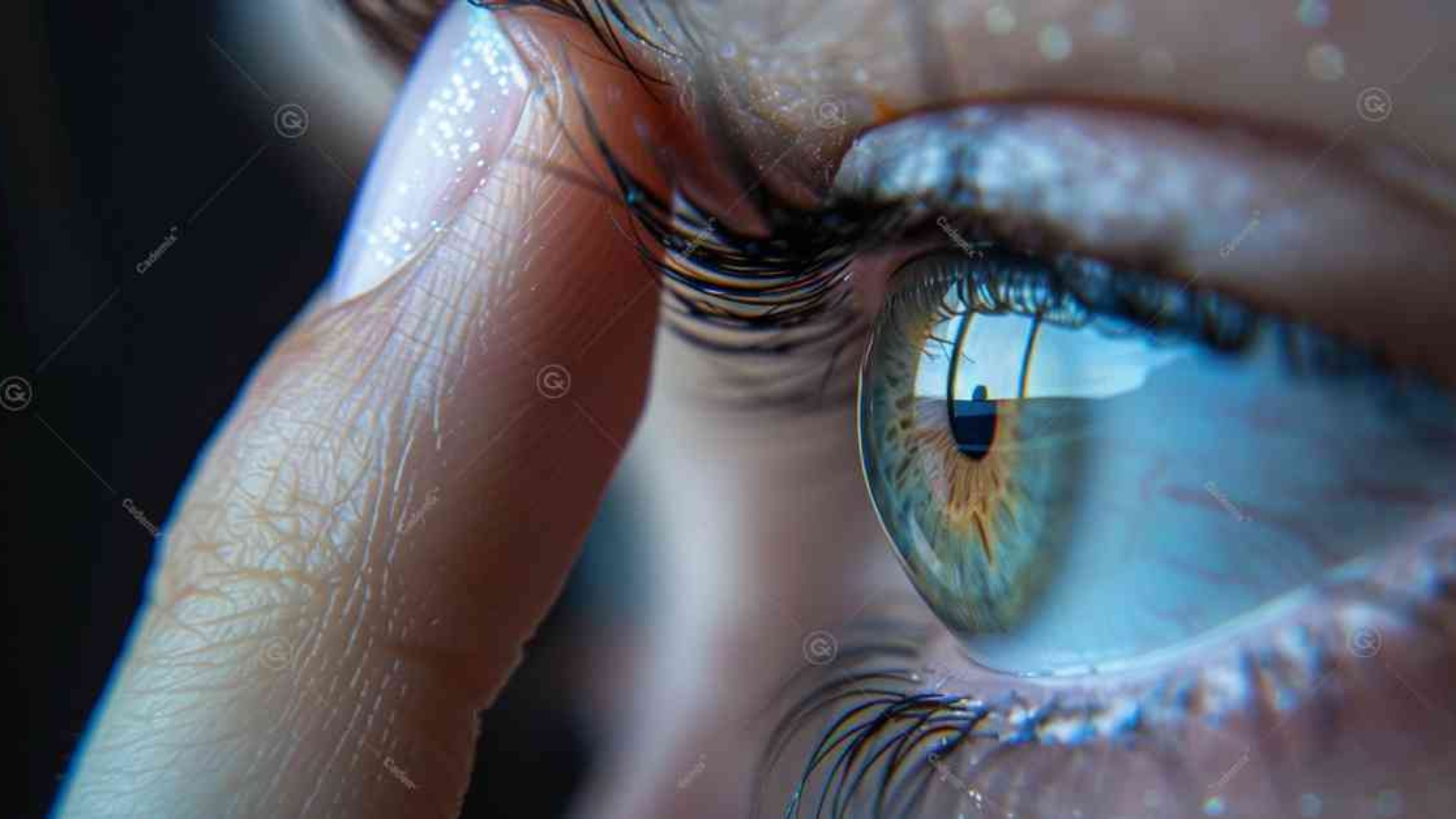
Bifocal contact lenses are a fascinating application of optical science, providing a solution for people with presbyopia—a condition that affects near vision as we age. This article delves into the intricate details of optics, the principles behind bifocal contacts, and the technology used to design these lenses. We’ll explore how light rays interact with these lenses, the different designs available, and their practical applications.
bifocal contacts, bifocal contact lenses, presbyopia, optics, lens design, light refraction, contact lens technology, simultaneous vision, concentric rings, aspheric designs, segmented lenses, fitting bifocal contacts.
Understanding Optics and Vision
Basic Principles of Optics
Light as a Wave
Light behaves both as a wave and a particle, but for understanding optics in contact lenses, we primarily consider its wave properties. Light waves travel through different media, bending (refracting) when they move from one medium to another.
Refraction and Lenses
Refraction occurs when light waves change direction as they pass from one medium to another with a different refractive index. Lenses use this principle to bend light rays to focus them at a specific point. The curvature and material of the lens determine how it refracts light.

How the Eye Focuses Light
The Cornea and Lens
The cornea and the lens of the eye work together to focus light onto the retina. The cornea provides most of the eye’s refractive power, while the lens fine-tunes the focus.
Accommodation
Accommodation is the process by which the eye changes the shape of the lens to focus on objects at different distances. As we age, the lens becomes less flexible, leading to presbyopia and the need for bifocal lenses.
The Science of Bifocal Contacts
Principles of Bifocal Lenses
Dual Focus
Bifocal lenses have two distinct optical powers: one for near vision and one for distance vision. This dual focus allows individuals to see clearly at different distances without switching between different pairs of glasses or contact lenses.
Light Ray Interaction
When light rays enter a bifocal lens, they are split into two paths—one path for near vision and one for distance vision. The eye’s brain processes these different images, allowing the wearer to see clearly at multiple distances.
Types of Bifocal Contact Lenses
Simultaneous Vision Lenses
Simultaneous vision lenses present both near and distance vision simultaneously. The brain learns to select the appropriate focus depending on the viewing distance.
Concentric Rings
Concentric ring bifocal lenses have alternating rings of near and distance vision. For example, the center of the lens might provide distance vision, while the next ring provides near vision, and so on.
Aspheric Designs
Aspheric bifocal lenses have a gradual transition between near and distance powers. The lens design smoothly changes power from the center to the edge, providing a more natural visual experience.
Segmented Lenses
Segmented bifocal lenses function similarly to traditional bifocal glasses, with distinct zones for near and distance vision. These lenses are typically rigid gas permeable (RGP) and have a visible line separating the two sections.

Detailed Optics of Bifocal Contacts
Refractive Indices
The refractive index of a lens material determines how much it bends light. Bifocal contacts use materials with specific refractive indices to create the dual-focus effect.
Wavefront Technology
Advanced bifocal lenses use wavefront technology to measure and correct optical aberrations. This technology ensures that light rays are focused accurately, enhancing visual clarity.
Diffraction and Interference
Diffraction occurs when light waves encounter an obstacle or aperture, causing them to bend and spread out. Interference is the interaction of light waves that can amplify or cancel each other out. These principles are considered in the design of bifocal lenses to minimize optical aberrations and improve vision quality.
Examples and Applications
Example 1: Concentric Ring Design
A concentric ring bifocal lens might have a central zone for distance vision and alternating rings for near and distance vision. When a person looks at an object, light rays from the object pass through both near and distance zones. The brain processes these images and selects the appropriate one for clear vision.
Example 2: Aspheric Design
An aspheric bifocal lens gradually changes power from the center to the edge. This design minimizes abrupt transitions between near and distance vision, providing a smoother visual experience. The lens’s aspheric shape helps to focus light more precisely on the retina, enhancing overall vision quality.
Example 3: Segmented RGP Lenses
Segmented RGP bifocal lenses have distinct zones for near and distance vision, separated by a visible line. These lenses maintain their shape on the eye, providing stable vision correction. When the wearer looks down to read, the near vision segment comes into focus, and when looking straight ahead, the distance segment is used.
Practical Considerations and Tips
Fitting Bifocal Contacts
Comprehensive Eye Exam
A comprehensive eye exam is essential to determine the correct prescription for bifocal contacts. This exam should include measurements of your eye’s shape, size, and refractive errors.

Professional Fitting
Fitting bifocal contacts requires precision and expertise. An eye care professional will ensure that the lenses fit properly and provide optimal vision correction.
Adapting to Bifocal Contacts
Adjustment Period
There may be an adjustment period when switching to bifocal contacts. Your brain needs time to learn how to process the dual-focus images. Consistent wear and patience are key to adapting successfully.
Regular Follow-Up
Regular follow-up appointments with your eye care professional help monitor your progress and make any necessary adjustments to your lenses.

Conclusion
Bifocal contact lenses are a remarkable application of optical science, offering a solution for presbyopia by providing clear vision at multiple distances. Understanding the detailed optics behind these lenses—from light refraction and wavefront technology to the design principles of concentric rings and aspheric shapes—highlights the complexity and innovation involved. For optimal results, it’s crucial to have a thorough eye exam, professional fitting, and regular follow-ups. By embracing the science and technology behind bifocal contacts, wearers can enjoy enhanced vision and comfort.
For more information on bifocal contact lenses, visit the American Optometric Association (AOA).
Learn about the latest advancements in contact lens technology from the Contact Lens Society of America (CLSA).
Explore detailed optics and vision correction principles from the Optical Society (OSA).