Cademix Institute of Technology, Austria | +43 650 967 7080 | info@cademix.org

Cademix Institute of Technology
Job seekers Portal for Career Acceleration, Continuing Education, European Job Market
When buying or renting a property, potential clients would typically visit a prospective property in person. They expect to physically see the layout and design of the property for themselves. In more recent years, realtors or property owners would take photos of key aspects of the property. Usually, they publish them online, for prospective buyers to view the property from the comfort of their home. There are several limitations with these approaches, but scenario-based realistic 3D rendering in real estate is a high tech solution, we look into in this article. It opens up new opportunities for businesses and new career development paths for high tech graduates.

The problem
- First of all, who is prepared to travel distances to view a property? Physically visiting many properties is time consuming for the buyer, unless they live in the neighborhood.
- Most of real estate agencies do not have professional photographers. The photos are standard views, often low quality and therefore don’t provide the viewer with the details of features and layout.
- Photos must also be taken at “best timing available” and from the “best spots available” in the property. But sometimes, it’s not physically possible to get a good photo from certain spots in the property, because a realtor can’t stand certain tight spaces or get the right angle for the photo. Also it is not easy to find the best timing and order the perfect weather for the photoshooting.
- To have photos or inspections arranged, a property must be physically built first . Therefore, there is a long lead time between construction completion and finding a buyer. This not only costs developers time, but money as well. Buyers can buy “off-plan”, but this is risky as it’s based on limited information and basic floor diagrams. In the case on On-demand interior design, it is a real challenge to convince the potential buyers.
These limitations are clearly frustrating for agents and buyers. The limitations are not easy to fix. As a result, agents and buys must turn to new methods.
Enter: 3D photorealistic rendering.
3D photorealistic rendering is the, well, artform of producing a 3D image of a real-life image or scene using software. Constant improvements in computer power and technology mean 3D artists can create close to lifelike images. This really is a game-changer for the real estate, construction and architecture industries, and brings benefits such as:
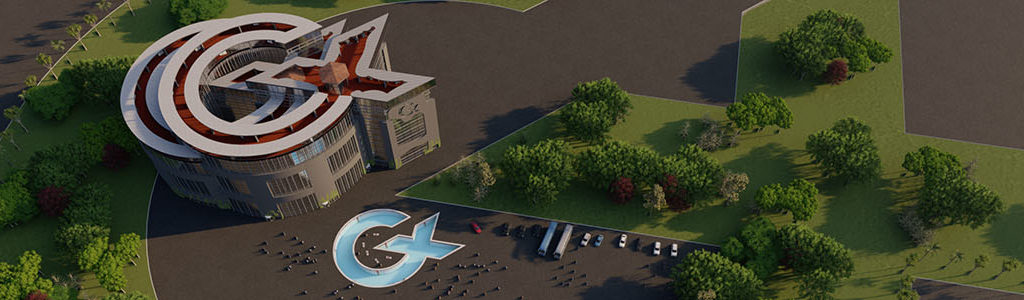
- Allowing images from the best angles of the property possible, rather than restricting to where taking photos is just possible.
- Allowing images with ideal lighting/time of day conditions to give the image the greatest appeal to a viewer, as well as high-quality interior design and furnishing aspects.
- Creating 3D images before construction of a property started and viewing these images alongside the dimensioned floor plan (rather than the floor plan alone) would give an off-plan buyer much more confidence.
- However, there’s a catch; creating 3D renders requires a high level of skills and expensive resources, so it’s not readily available for companies to use. In particular, small companies are unlikely to have budget to spend on training their staff to use 3D rendering software. They’re also unlikely to want to spend on software licenses and high-powered computer hardware.
The solution
The solution is that real estate companies collaborate with 3D rendering industry experts to do the work together. Since the jobs are one-off per property, there are no ongoing costs for the realtor to maintain their software or staff and capital is spent only as needed. As a result all property companies have greater access to 3D rendering services meaning they can scale with their business, and that even a small player is given the opportunity to gain an edge over their competitors.
https://www.cademix.org
In summary, though 3D rendering is a must-have for modern construction companies, architects and realtors, the requirements for it’s integration into a company are limiting. Contracting an expert in 3D rendering gives companies fast, affordable access to this technique, set to take off in the industry in the very near future.