
Career Pathway: Becoming a Web Security Engineer through Passkeys and Passwordless Authentication
Editorial Identifier: CM-0027 Category: Web, Mobile & Cyber Technologies Angle: Career Advancement
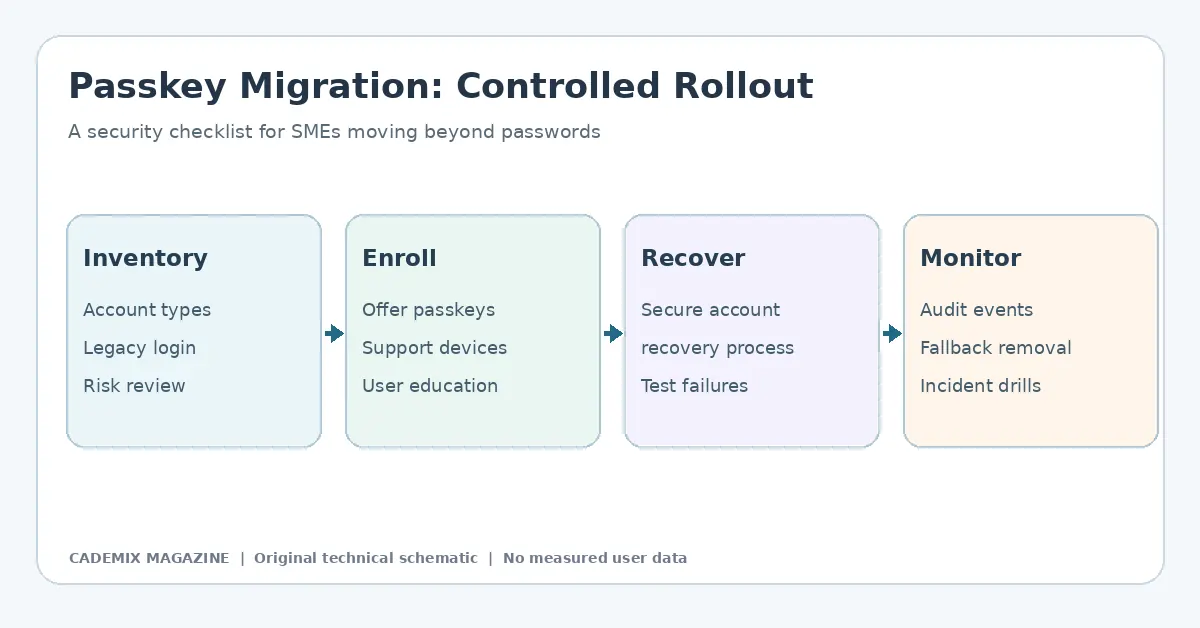
Table of Contents
Table of Contents
- The Technical Foundation: Beyond the Surface
- Cryptographic Literacy
- The WebAuthn Standard
- Identity Providers and Federation
- Building a Portfolio: Evidence of Competence
- Project 1: The "From Scratch" Implementation
- Project 2: Cross-Platform Interoperability Testing
- Project 3: Security Audit and Threat Modeling
- Contributing to Open Source
- Professional Development Routes
- Academic Backgrounds
- Certifications
- Continuous Learning Resources
- Employer Expectations and Industry Trends
- The Business Case for Passwordless
- Handling Legacy Systems
- Collaboration with Product and Design Teams
- Caveats and Challenges in the Field
- Fragmentation and Compatibility
- User Resistance and Trust
- Complexity of Recovery Flows
- Rapid Evolution of Standards
- Conclusion
- Further reading: Web Security Engineer Through Passkeys
- External reference for further study
The landscape of digital identity is undergoing its most significant shift in decades. For nearly thirty years, the username-and-password paradigm has served as the gatekeeper to the web, despite being widely acknowledged by security professionals as fragile, cumbersome, and increasingly ineffective against modern phishing and credential-stuffing attacks. As organizations migrate toward passwordless authentication, driven largely by the adoption of passkeys based on the FIDO2 and WebAuthn standards, a new niche within cybersecurity engineering is emerging. This transition offers a distinct career pathway for students, graduates, and job seekers who wish to specialize in identity management and secure application architecture.
Becoming a web security engineer with a focus on passkeys requires more than just understanding how to implement a login button. It demands a deep comprehension of public-key cryptography, browser security models, cross-platform interoperability, and the human factors involved in user experience design. This article outlines the technical skills, portfolio strategies, professional development routes, and employer expectations necessary to build a competitive career in this specialized domain.
The Technical Foundation: Beyond the Surface
To position oneself as an expert in passwordless security, one must first master the underlying technologies that make it possible. Employers are not looking for individuals who can merely copy-paste code from a documentation library; they seek engineers who understand why the system works and where it fails.
Cryptographic Literacy
At the heart of passkey technology lies asymmetric cryptography. Unlike traditional passwords, which are shared secrets stored (ideally hashed) on a server, passkeys utilize a pair of keys: a private key protected by an authenticator (which may be device-bound or securely synchronized across devices), and a public key registered with the service provider.
Aspiring engineers must be comfortable with concepts such as elliptic curve cryptography (ECC), specifically algorithms like ECDSA (Elliptic Curve Digital Signature Algorithm) and EdDSA (Edwards-curve Digital Signature Algorithm). Understanding how these keys are generated, stored, and used to sign challenges is critical. You do not need to be a cryptographer capable of designing new algorithms, but you must understand the threat model. For instance, why is storing a private key in a hardware-backed secure enclave superior to storing it in software? What happens if the entropy source for key generation is compromised?
The WebAuthn Standard
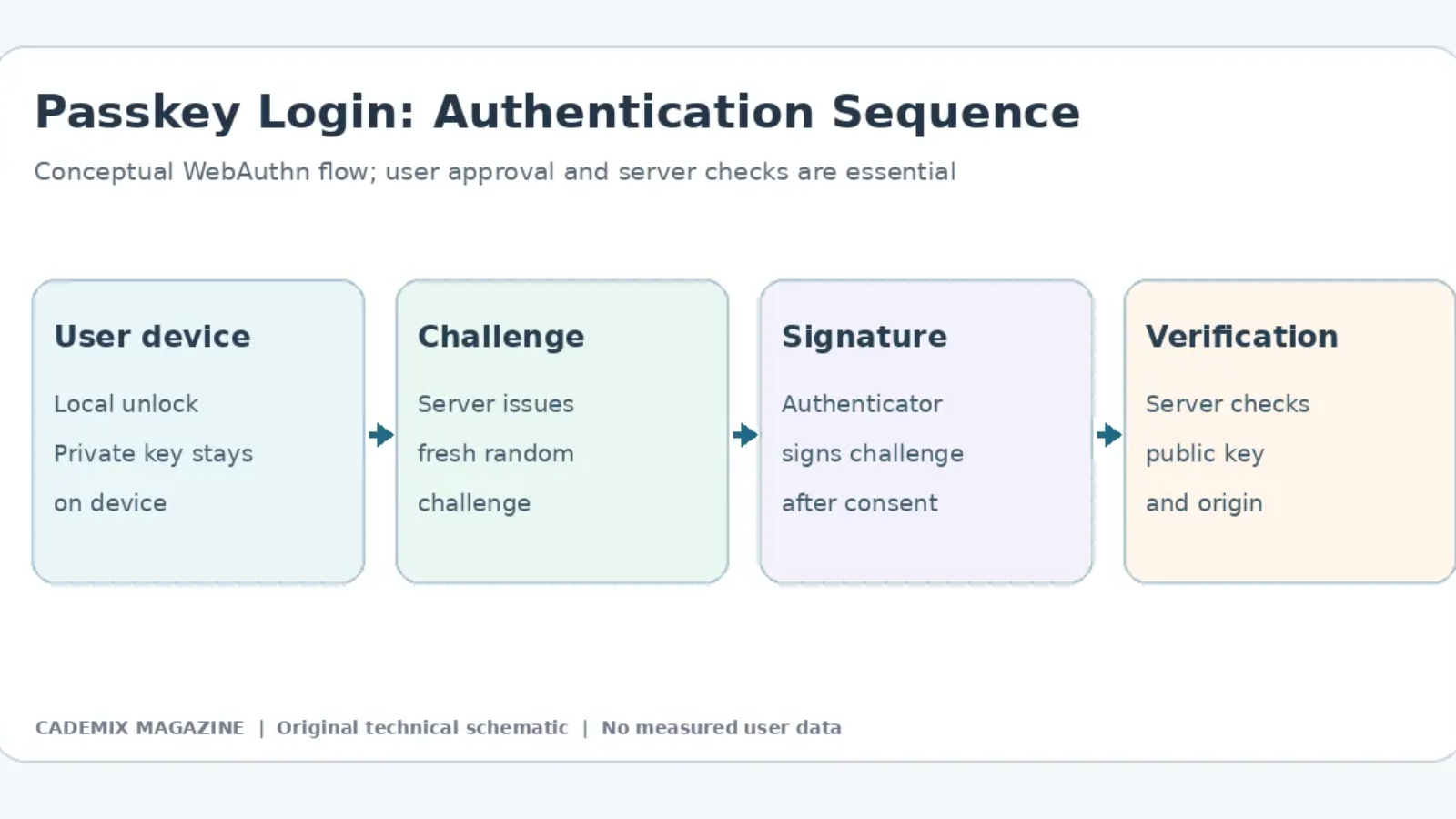
WebAuthn (Web Authentication API) is the W3C standard that allows browsers to communicate with authenticators. A competent security engineer must understand the flow of a WebAuthn ceremony: 1. Registration: The client generates a key pair, sends the public key to the relying party (server), and receives an attestation object. 2. Authentication: The server sends a challenge; the client signs it with the private key; the server verifies the signature using the stored public key.
Crucially, candidates should study the nuances of authenticatorAttachment (platform vs. roaming), userVerification requirements, and the difference between direct and indirect attestation. Misconfiguring these parameters can lead to either overly restrictive user experiences or vulnerable security postures.
Identity Providers and Federation
Passkeys rarely exist in isolation. They are often part of a larger identity ecosystem involving OpenID Connect (OIDC) and OAuth 2.0. Engineers must understand how passkeys integrate with existing Single Sign-On (SSO) providers. How does a passkey interact with a federated identity provider? If a user loses their device, what is the recovery path? These questions touch on account takeover prevention and resilience, areas where security engineers add immense value.
Building a Portfolio: Evidence of Competence
For students and recent graduates, the lack of formal work experience is often the biggest barrier to entry. However, the field of web security is uniquely suited to self-directed learning and demonstrable proof of skill. A strong portfolio can outweigh a generic resume when it showcases practical implementation and problem-solving abilities.
Project 1: The “From Scratch” Implementation
Avoid relying solely on high-level libraries like SimpleWebAuthn or Passport.js without understanding the internals. Build a minimal, functional WebAuthn registration and login flow from scratch using raw JavaScript and Node.js (or Python/Go). * Objective: Demonstrate the ability to handle binary data buffers, parse CBOR (Concise Binary Object Representation) encoded attestation objects, and verify signatures manually. * Deliverable: A GitHub repository with clean, commented code explaining each step of the cryptographic verification process. Include unit tests that simulate various edge cases, such as malformed attestation statements or replay attacks.
Project 2: Cross-Platform Interoperability Testing
Passkeys are designed to be portable across devices via cloud sync (e.g., iCloud Keychain, Google Password Manager). Create a test suite that validates behavior across different platforms. * Objective: Show awareness of platform-specific quirks. For example, how does Safari on iOS handle biometric prompts differently than Chrome on Android? * Deliverable: A blog post or technical write-up detailing your findings. Document any inconsistencies in error messages or UX flows. This demonstrates attention to detail and an understanding of the real-world deployment environment, which is highly valued by employers building consumer-facing applications.
Project 3: Security Audit and Threat Modeling
Take an open-source project that implements WebAuthn and conduct a theoretical security audit. * Objective: Identify potential vulnerabilities such as missing origin validation, improper handling of counter values (which prevent replay attacks), or insecure storage of public keys. * Deliverable: A structured report outlining the threat model. Use frameworks like STRIDE (Spoofing, Tampering, Repudiation, Information Disclosure, Denial of Service, Elevation of Privilege) to categorize risks. Propose specific code changes to mitigate these risks. This proves you think like an attacker, a core requirement for any security role.
Contributing to Open Source
Engage with the broader community by contributing to libraries like simplewebauthn, fido2-lib, or browser bug trackers related to WebAuthn. Even small contributions—such as fixing documentation errors, adding test cases, or resolving minor bugs—signal to employers that you are active in the ecosystem and capable of collaborating within distributed teams.
Professional Development Routes
There is no single linear path to becoming a web security engineer specializing in identity. However, certain educational and certification routes provide structured knowledge and industry recognition.
Academic Backgrounds
While a degree in Computer Science is common, it is not strictly mandatory. Degrees in Information Security, Software Engineering, or even Mathematics can provide the necessary foundational logic. The key is to supplement academic theory with practical application. Many universities now offer electives in applied cryptography or secure software development; prioritize these courses.
Certifications
Certifications serve as a signal of baseline competence. Consider the following progression: 1. CompTIA Security+: Provides a broad overview of security principles, including identity and access management (IAM). Useful for early-career candidates to establish general vocabulary. 2. CISSP (Certified Information Systems Security Professional): While advanced, it covers IAM domains comprehensively. It is more relevant for mid-to-senior roles but signals serious commitment. 3. Vendor-Specific Certifications: Look for certifications from major identity providers (Okta, Auth0, Microsoft Azure AD) that include modules on MFA and passwordless migration. These demonstrate familiarity with enterprise-grade tools. 4. OSCP (Offensive Security Certified Professional): If your interest leans toward penetration testing of web apps, OSCP provides rigorous training in exploiting vulnerabilities, including those in authentication systems.
Continuous Learning Resources
The WebAuthn specification is evolving. Follow updates from the FIDO Alliance and the W3C Web Authentication Working Group. Subscribe to newsletters focused on identity security and read whitepapers from companies leading the charge (e.g., Apple, Google, Microsoft, Yubico). Understanding the roadmap helps you anticipate future employer needs, such as support for multi-device passkeys or hybrid authentication flows.
Employer Expectations and Industry Trends
When interviewing for roles titled “Identity Engineer,” “Application Security Engineer,” or “Web Security Specialist,” candidates should expect questions that go beyond coding. Employers are looking for strategic thinkers who can balance security with usability.
The Business Case for Passwordless
Be prepared to articulate why a company should invest in passkeys. It is not just about security; it is about cost reduction and conversion rates. * Support Costs: Password resets are among the highest-volume IT helpdesk tickets. Eliminating them saves money. * Conversion Friction: Traditional signup forms have high abandonment rates. Passkeys reduce friction by leveraging existing device biometrics. * Compliance: Regulations like GDPR and CCPA require robust protection of personal data. Strong authentication mechanisms help meet these obligations.
Candidates who can link technical features to business outcomes stand out. During interviews, discuss how you would measure the success of a passwordless rollout (e.g., tracking login success rates, reduction in support tickets, decrease in account takeover incidents).
Handling Legacy Systems
Rarely will you start with a greenfield project. Most enterprises have legacy applications built on basic session cookies or JWTs. Employers want to know how you plan to migrate users gradually. * Hybrid Approaches: Discuss strategies for supporting both passwords and passkeys during transition periods. * User Education: How do you onboard users who are unfamiliar with biometrics? What fallback mechanisms are necessary? * Technical Debt: Acknowledge the challenges of retrofitting WebAuthn into older frameworks. Show empathy for the constraints developers face while insisting on security best practices.
Collaboration with Product and Design Teams
Security engineers do not work in silos. You will collaborate closely with UX designers to ensure the authentication flow feels seamless. Be ready to discuss scenarios where security requirements conflict with design preferences. For example, a designer might want a custom-branded prompt, but the browser enforces a standardized UI for security reasons. Demonstrating diplomatic communication skills and a willingness to find compromises is crucial.
Caveats and Challenges in the Field
While the career outlook is positive, there are significant hurdles that aspiring engineers must navigate.
Fragmentation and Compatibility
Despite standardization efforts, implementation differences persist across browsers and operating systems. Safari, Chrome, Firefox, and Edge may handle edge cases differently. Debugging issues often requires reproducing problems on multiple physical devices, which can be time-consuming and expensive. Candidates should highlight their experience with cross-browser testing tools and virtual machine setups.
User Resistance and Trust
Some users remain skeptical of biometrics due to privacy concerns. Others struggle with the concept of “device-bound” credentials. As a security engineer, you must advocate for transparency. Explain clearly how data is encrypted and that biometric templates never leave the device. Overcoming user hesitation is part of the job.
Complexity of Recovery Flows
Passwordless systems introduce new complexities in account recovery. If a user loses their phone and has no backup method, they are locked out. Designing secure yet accessible recovery paths (e.g., trusted contacts, email-based magic links as a secondary factor) is a difficult engineering challenge. Employers will test your ability to design resilient systems that do not create new points of failure.
Rapid Evolution of Standards
The FIDO2/WebAuthn ecosystem is still maturing. New extensions and profiles are being developed. Staying current requires continuous effort. A static knowledge base quickly becomes obsolete. Successful engineers cultivate a habit of daily reading and experimentation.
Conclusion
The shift toward passwordless authentication represents a pivotal moment in web security. For students and job seekers, this transition offers a unique opportunity to specialize in a high-demand, technically rich area while continuing to demonstrate practical competence rather than relying on labor-market predictions. By mastering the cryptographic underpinnings of WebAuthn, building a portfolio that demonstrates practical implementation and security auditing skills, and understanding the business context of identity management, you can position yourself as a valuable asset to any forward-thinking organization.
Success in this field requires more than technical prowess; it demands adaptability, clear communication, and a user-centric mindset. As passkeys become the default rather than the exception, the engineers who understand how to deploy them securely, efficiently, and inclusively will define the next era of digital trust. Start today by experimenting with the APIs, contributing to open source, and documenting your journey. The pathway is clear, and the demand for expertise is growing.
External reference for further study
Foundational application-security risk guidance. See OWASP Top Ten. This reference is a starting point, not a citation validating every claim in this article.
Web Security Engineer Portfolio: Authentication Threat Model
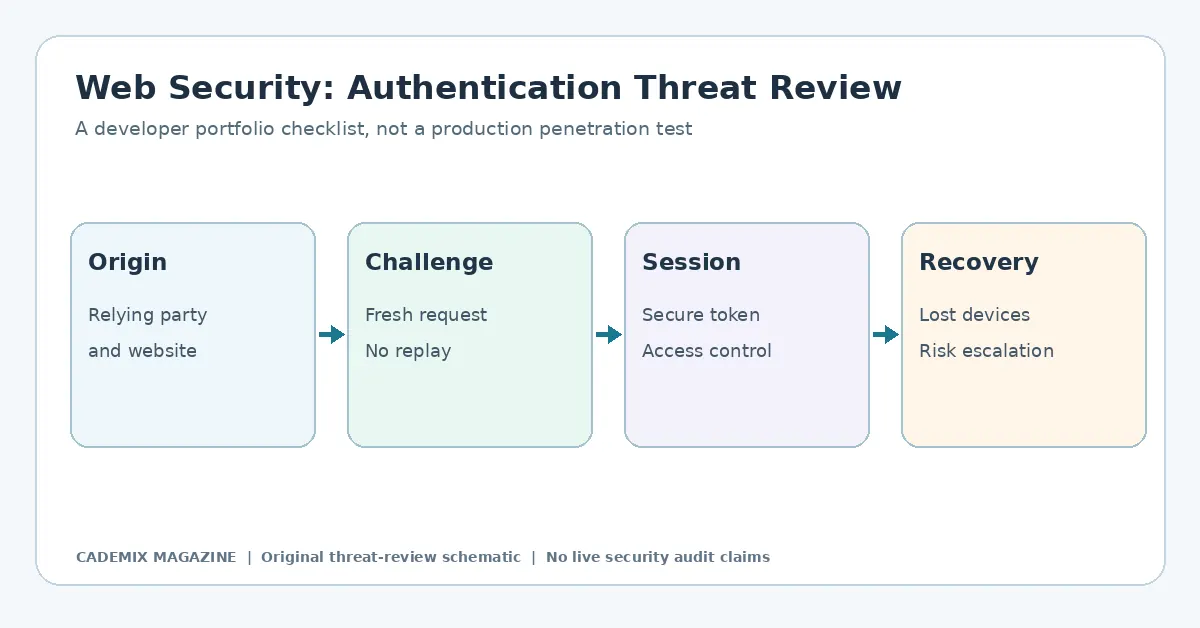
A portfolio for a web security engineer should demonstrate why a design resists realistic attacks, not simply display a successful login animation. Begin with a small application under your control, define the protected accounts and document relevant threats: credential phishing, replayed challenges, stolen sessions, insecure recovery and abuse of administrative privileges. Draw boundaries between the user device, browser, web application, relying party and identity provider. State which protections depend on the browser or authenticator and which remain the application team’s responsibility.
Build a minimal passkey registration and sign-in demonstration that uses an established WebAuthn implementation or a well-supported library. Do not write custom cryptography to impress recruiters. Instead, show secure configuration, meaningful tests and careful logging. A test should fail if the relying party identifier is wrong, if an origin does not match the expected site or if the challenge is reused. Record the conditions and results as a reproducible exercise; do not pretend this demonstration proves production security or compliance.
Explain the account recovery plan in the same level of detail as the login flow. What if a user loses every registered device? Who verifies identity, which safeguards delay risky changes and how is the account holder notified? Document the consequences of weak recovery methods without suggesting any single technique prevents all account takeover. A web security engineer should also understand the boundary between authentication and authorization: signing in successfully does not automatically grant permission to access another user’s records.
Testing and Responsible Security Communication
Prepare a technical review containing a threat model, test matrix, sample configuration, version information, observed test outputs and known limitations. Avoid publishing real secrets, user account identifiers or vulnerabilities in third-party systems. When assessing a service that is not yours, follow its authorized security testing scope. The ability to communicate findings clearly and propose realistic mitigation matters as much as discovering an individual weakness.
Use the W3C WebAuthn specification and MDN API reference to check protocol terminology. Employment requirements differ widely across companies, and credentials or certifications alone do not guarantee security-engineering employment. A portfolio should show the work you actually completed, the tests you could reproduce and the limits you recognize.
Professional Development Checklist
Study the basics of HTTP, TLS, sessions, cookies, access control and secure coding before specializing in passkeys. Learn how to read application logs without exposing personal data and how to write a concise incident report. Compare an authentication design’s security assumptions with the organization’s actual device and recovery policies. When presenting your experience, distinguish personal learning projects from production deployments and show what would need independent review before a live launch.
Finally, practice explaining security trade-offs to nontechnical colleagues. A secure system that users cannot recover may create operational pressure for unsafe workarounds. Conversely, an easy recovery process may undermine a strong authentication method. Show how you would document those trade-offs, escalate unresolved risks and seek input from the authorized security and privacy owners. Employers need engineers who can protect users without inventing absolute guarantees.